

What Is Boarding Up? (Property Security Boarding Up in Chelmsford)
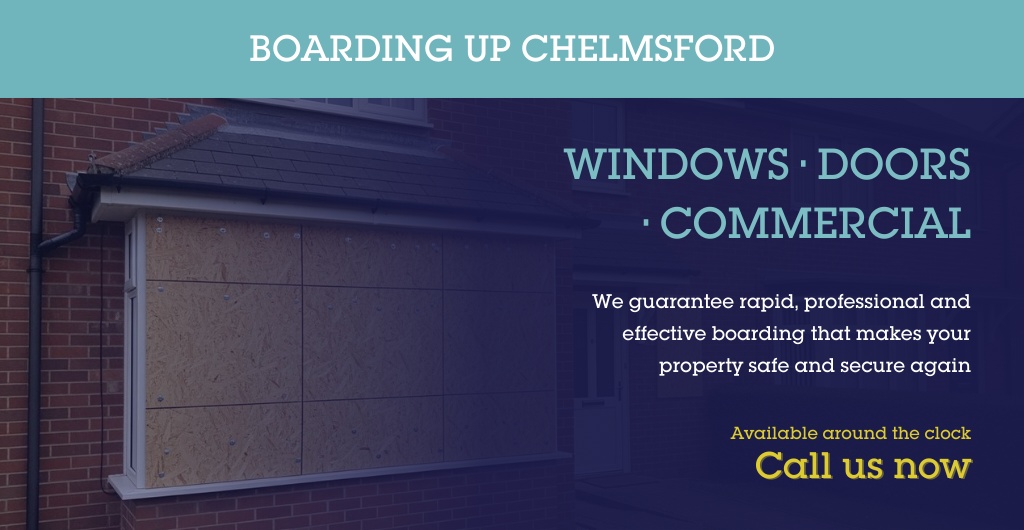
Boarding up is the process of securing a damaged, missing, or vulnerable opening in a building—most commonly a window, door, shopfront, or rooflight—using strong sheet materials (usually exterior-grade plywood or OSB) fixed in a way that prevents easy removal from the outside. The aim is to make safe the property, reduce the risk of further damage, and help you stay compliant with insurance and duty-of-care obligations.
At Boarding Up Chelmsford, we provide boarding up across the CM postcode area (CM0–CM77), including emergency call-outs. If you need urgent help after a smashed window, forced entry, or storm damage, call 01245 945 217 and we’ll talk you through the safest next steps.
When Is Boarding Up Needed?
People usually find us at stressful moments—after something unexpected has happened and the property can’t be left open. Boarding up is commonly needed when:
- You need to board up a broken window after burglary, vandalism, or accidental impact
- A door has been forced and you need to board up a door (or temporarily secure it until replacement)
- A shopfront has been damaged and you need it shopfront boarded up to protect stock and prevent further entry
- Storms have broken glazing or lifted panels and you need temporary boarding to keep the weather out
- A property is empty (between tenants, probate, renovation) and needs to secure property against opportunistic entry
- You’re dealing with fire or flood damage and the opening is no longer secure (we secure—remediation is separate)
If you need urgent attendance out of hours, we offer emergency boarding up across Chelmsford and the wider CM area.
What Boarding Up Actually Does (And What It Doesn’t)
Boarding up is a security and safety measure. Done properly, it:
- Prevents easy access through broken or missing glazing/doors
- Reduces the risk of further theft, vandalism, and weather damage
- Helps keep a site safe for occupants, neighbours, and passers-by
- Creates time for proper repairs (glazing, joinery, roof works) to be arranged
What it doesn’t do:
- It doesn’t “repair” the underlying damage (it’s a temporary or medium-term security measure)
- It doesn’t restore insulation or full weather-tight performance like new glazing would (though we do aim to reduce draughts and water ingress where practical)
- It doesn’t replace specialist services after fire (smoke/odour remediation) or structural repairs—our role is to make safe and secure
If the frame or surrounding structure is too damaged for non-destructive fixing, we’ll explain the options before proceeding—especially if additional work is needed to achieve a secure result.
Types of Boarding Up (Windows, Doors, Shopfronts, Roof Openings)
Different openings call for different methods. The goal is always the same—secure, safe, and difficult to remove from outside—but the approach changes depending on access, height, frame condition, and risk level.
Window boarding up
Window boarding is used for cracked or missing panes, shattered double-glazed units, or insecure frames. We normally use:
- 18mm exterior-grade plywood for robust security and better resistance to attack
- 12mm OSB for smaller or lower-risk openings where appropriate
Fixings and method depend on the window type and condition. For example, we may use timber framing/cleats or through-fixing with anti-tamper fixings when the opening must resist attempted removal.
If you specifically need this service, see window boarding in Chelmsford.
Door boarding up (and temporary steel doors)
A damaged door is a high priority because it often indicates forced entry. Door boarding can mean securing a splintered door leaf, securing sidelights, or closing up an opening where the door is missing entirely.
Where a property needs repeated access (landlords, insurers, facilities teams), a temporary steel door can be a better option than timber boarding—stronger, more professional for medium-term use, and allows controlled entry.
Learn more on door boarding in Chelmsford.
Shopfront boarded up
Retail and commercial glazing tends to involve larger panes, higher footfall areas, and greater urgency—especially if the premises will be left overnight. Boarding a shopfront needs careful fixing, stable sheet joins, and attention to public safety around the frontage.
For commercial premises, see shopfront boarding.
Rooflights and overhead openings
Boarding up isn’t only for windows at ground level. Roof damage or broken rooflights can let in rain quickly, and unsecured overhead openings can be dangerous.
Access, safe working at height, and weatherproofing become the key concerns. For this type of work, see roof boarding.
Materials We Use (And Why It Matters)
Not all “boarding” is equal. The wrong material or poor fixing can be pulled off quickly—sometimes leaving the opening even more vulnerable.
We typically use:
- Exterior-grade plywood (often 18mm): strong, stable, better suited to security-critical openings
- OSB (often 12mm): workable for smaller openings and short-term needs, depending on risk
- Anti-tamper fixings where needed: important when the property is unattended and you need to prevent removal from outside
- Supplementary timber battens/cleats: helps spread load and improve hold in weaker frames
We choose the method based on the opening, what’s left of the frame, whether the property is occupied, and how long the security needs to last. If you’re unsure what’s appropriate, we’ll talk it through on the phone before we attend.
What Happens When You Call Us (Step by Step)
When you contact us, the focus is to reduce risk quickly and keep everything straightforward.
-
We ask a few practical questions
What’s been damaged (window/door/shopfront/roof), whether anyone is inside, and whether police or fire service have attended. -
We give a realistic ETA
We don’t promise fixed arrival times—conditions vary—but we prioritise urgent calls and will tell you what’s realistic when you ring. -
We attend and assess safely
If there’s glass on the ground, unstable frames, or overhead hazards, we’ll deal with safety first. -
We secure the opening
We install boards/screens using an appropriate method for the material and the condition of the frame. -
We provide documentation
Typically this includes an itemised invoice and a brief work statement. We can also provide time-stamped photos if useful for your insurer.
If you’re dealing with a specific event (break-in, storm, impact), you may find these situation guides useful: burglary repairs and boarding or storm damage boarding.
Is Boarding Up Temporary or Long-Term?
Boarding up can be:
- Short-term (hours to days): for immediate security while glazing or joinery is arranged
- Medium-term (weeks to months): when repairs are delayed, a property is vacant, or insurance processes take time
If a building is going to remain unoccupied, repeated timber boarding isn’t always the best answer. In those cases, we may recommend more robust options intended for longer use—particularly for void buildings.
For properties with extended vacancy risk, see vacant property boarding up.
Will Boarding Up Damage My Frames?
It depends on the condition of the existing frame and the fixing method required.
- Where possible, we use methods designed to be secure without unnecessary damage.
- If frames are already rotten, split, or blown out from impact, we may need to fix into more solid surrounding structure to achieve a safe result.
If any approach is likely to leave additional marks (for example, because the frame won’t hold fixings safely), we’ll explain that before proceeding—especially for listed-style details or decorative timberwork.
Is Boarding Up Covered by Insurance?
Often, emergency securing is covered under building insurance—particularly after burglary, vandalism, storm damage, fire, or impact—but cover varies by policy and circumstances.
What we can do is provide the paperwork insurers typically need, such as:
- A clear description of what was secured and why (make safe / prevent further loss)
- Time-stamped photos (where requested)
- An itemised invoice and date of attendance
We’re not loss adjusters or legal advisors, but we’ve worked alongside enough claims to understand what documentation is commonly requested. For practical guidance, visit insurance claims support.
Boarding Up for Homes vs Businesses
The priorities are slightly different depending on the property.
Residential properties
For homes and flats, the focus is usually immediate safety, preventing draughts/weather entry, and helping you feel secure again—especially after a break-in.
Commercial premises
For shops, offices, and other commercial sites, the priority is often visible security, reducing downtime risk, protecting stock, and meeting duty-of-care responsibilities around the frontage.
FAQs: What Is Boarding Up?
Is boarding up the same as “making safe”?
Boarding up is one of the most common ways to make safe a damaged opening. “Make safe” can also include removing loose glass, stabilising hazards, and securing access until repairs can be arranged.
Can you board up a smashed window the same night?
Often, yes—this is a common reason people call for emergency boarding up. Availability depends on workload and the specifics of the job, but we prioritise urgent risks and give a realistic ETA when you call.
What’s better: plywood or OSB?
Plywood is generally stronger and more secure for high-risk openings. OSB can be suitable for smaller openings or short-term needs. We choose based on security risk, opening size, and frame condition.
Can you board up from the outside only?
Sometimes. It depends on access, the height of the opening, and whether we can fix securely without creating a hazard. We’ll always choose the safest method for the location and conditions.
Do you provide paperwork for insurers?
Yes—typically an itemised invoice and a work statement. We can also provide photos if needed. See insurance claims support.
I’m in a CM postcode outside Chelmsford—do you still cover it?
Yes. We cover CM0–CM77. You can check your nearest page via areas we cover.
Ready to Secure the Property?
If you need a window or door secured, or you’re unsure what to do after damage, we’ll talk you through it.
Ready to get started? Call 01245 945 217 or email us for a free, no-obligation quote.
