


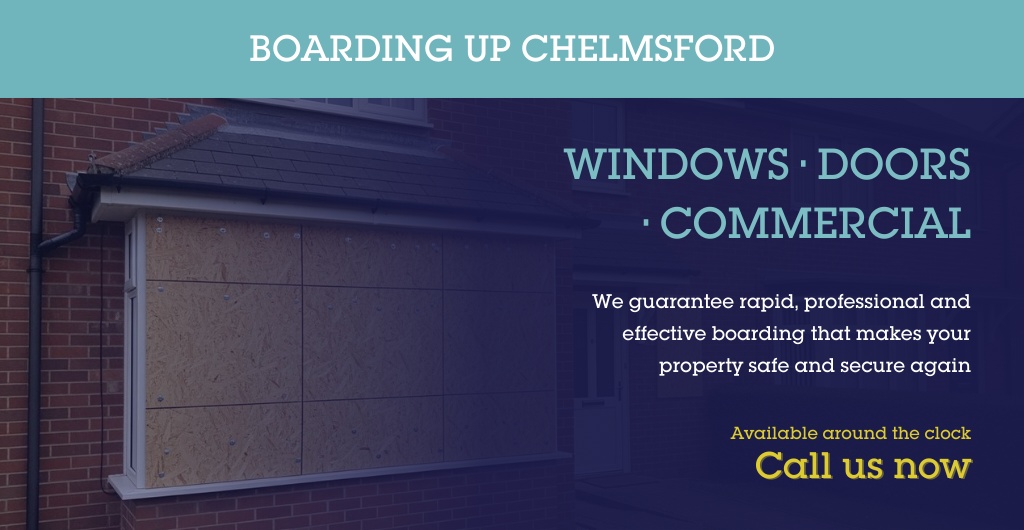
Vacant Property Boarding Up in Chelmsford (CM0–CM77)
A vacant property can go from “fine” to vulnerable very quickly. A single smashed window, a forced rear door, or storm damage that leaves a gap in the roofline can turn an empty building into an open invitation for trespass, theft of fittings, and water ingress.
At Boarding Up Chelmsford, we provide vacant property boarding up in Chelmsford and across the CM postcode area (CM0–CM77). We’re fully insured, have 10+ years’ experience, and our technicians are DBS-checked. Whether you’re a landlord between tenancies, an estate agent with a probate property, or a facilities manager responsible for an empty commercial unit, we focus on one thing: securing the property properly and documenting the work clearly.
If you need urgent help, you can call us any time: Call 01245 945 217.
When vacant properties in Chelmsford typically need boarding up
“Vacant” doesn’t always mean “abandoned”. In practice, many empty properties are temporarily unoccupied and still valuable—often with services connected, fixtures in place, and neighbouring homes close by. Common call-outs we see around Chelmsford and the wider CM area include:
- Between tenancies (landlords and letting agents): a small break-in attempt, missing keys, or a door that won’t lock after a tenant leaves.
- Probate and inheritance situations: property may be empty for weeks or months while paperwork is handled.
- Renovations and refurbishments: windows removed, doors changed, and tools/materials stored on site.
- Fire or flood aftermath: the building is unoccupied while drying, surveys, or repairs are arranged (we secure it; remediation is a separate service).
- Commercial voids: empty shop units or offices where glazing is vulnerable and footfall is higher.
- Storm damage: blown-in panels, dislodged window panes, or roof openings that need temporary weather protection.
If the property has already been targeted, it’s especially important to secure property properly—once someone knows a building is empty, repeat attempts are common.
For urgent attendance, see our dedicated page for emergency boarding up.
Risks that are specific to vacant buildings (and why “a quick board” isn’t always enough)
A vacant property has a different risk profile from an occupied one:
- No immediate reporting: damage can go unnoticed, so rain, cold, and vandalism can escalate.
- Opportunistic entry: an unlocked rear door, weak ground-floor window, or damaged frame is often all it takes.
- Theft of fixtures: copper piping, boilers, appliances, and even internal doors can be targeted.
- Nuisance and liability: trespass can lead to injury; owners may face claims or enforcement pressure if the building is left insecure.
- Insurance conditions: some policies have specific clauses about unoccupied properties (notification requirements, minimum security standards, inspection frequency).
Boarding up isn’t just about “covering a hole”. It’s about controlling access, reducing further damage, and helping you meet your insurer’s expectations with clear documentation.
How we secure vacant properties: methods, materials, and approach
The right method depends on how long the building will be empty, the type of opening, and the condition of frames and surrounding masonry. We’ll talk you through options on the phone, then confirm on site once we can see what’s actually happened.
Window boarding for void properties
For broken or missing glazing, we typically use:
- 18mm exterior-grade plywood for stronger, longer-lasting security (common for ground floor and vulnerable elevations)
- 12mm OSB for smaller or lower-risk openings where appropriate
We aim for a neat, secure fit with fixings that resist removal from the outside. On vacant properties, we often recommend anti-tamper fixings where the risk of repeat targeting is higher.
If the issue is primarily windows, see: window boarding in Chelmsford.
Door boarding up and temporary steel doors
For damaged doors or forced entries, a “board over” can work short-term, but it’s not always the best solution—especially if contractors, surveyors, or agents need controlled access.
Options can include:
- Door boarding up to immediately block access after a break-in attempt
- Temporary steel doors (where suitable) for medium-term security and managed entry
If you need to board up door damage after a forced entry, start here: door boarding.
Shopfronts and commercial voids
Empty retail units and offices can be more exposed—large panes, visible interiors, and higher footfall. We can make safe and secure openings using solid boarding designed for larger spans and public-facing locations.
If your unit needs to be shopfront boarded up, see: shopfront boarding.
Rooflights, skylights, and overhead openings
Vacant buildings sometimes suffer from missing tiles, broken rooflights, or damage from storms and debris. Overhead openings can lead to rapid water ingress, which is especially damaging when no one is inside to notice.
Where access and structure allow, we can secure vulnerable roof openings using appropriate sheeting/boarding methods for temporary protection.
Learn more: roof boarding.
When we recommend security screens instead of plywood
If a property is going to be empty for a longer period, or it has already been targeted repeatedly, plywood alone may not be the most practical answer. In some cases, steel security screens are a better medium-term option because they’re more resistant to removal and can allow ventilation where needed.
We’ll be honest about what’s appropriate. If the frame is too damaged for non-destructive fitting, we’ll explain your options before proceeding.
What to expect when you call us (especially for out-of-hours)
Vacant property calls are often urgent: a neighbour notices a smashed window, an agent arrives for a viewing and finds a forced door, or a contractor leaves site and an opening is discovered later.
When you call 01245 945 217, we’ll ask:
- Property location and CM postcode (so we can plan attendance)
- What’s damaged (window/door/shopfront/roof) and how many openings
- Whether the property is safe to access (signs of intrusion, unstable glass, fire damage, etc.)
- Any access details (keys, lockbox, managing agent contact)
We don’t promise fixed arrival times—traffic, weather, and live workload vary—but we do prioritise urgent situations and will give you a realistic ETA on the phone.
Typical vacant property scenarios we handle (Chelmsford & CM area)
Below are realistic examples of what “vacant property boarding up” often looks like in practice.
After a break-in attempt at an empty house
A common scenario is a ground-floor rear window forced or smashed. The frame may be splintered and glass may be scattered inside.
What we typically do:
- Attend to make safe by removing immediate hazards where feasible and safe
- Install temporary boarding with correct sizing and robust fixings
- Check for additional vulnerable points (e.g., adjacent windows, side access)
- Provide photos and a written work statement for your records/insurer
If this follows a break-in, our situation guidance is here: burglary repairs and boarding up.
Vandalism or targeted damage on a void building
Vacant properties can attract vandalism—especially if the building looks neglected or is in a quiet spot. It may start with one board up broken window request and escalate if not secured properly.
We can secure the openings and discuss whether stronger measures (like screens or temporary steel doors) are sensible based on how long the property will remain empty.
Related guidance: vandalism repair and boarding up.
Storm damage discovered days later
Sometimes the first sign is damp patches or neighbours reporting debris. A dislodged rooflight or damaged window can let water in quickly.
We can secure the opening to reduce further ingress and help stabilise the situation until permanent repairs are arranged.
Related guidance: storm damage boarding.
Documentation for insurers, landlords, and managing agents
We’re not loss adjusters and we can’t advise on policy wording, but we can provide documentation that insurers and stakeholders typically need:
- Time-stamped photos (before and after)
- Itemised invoice
- Work description / make-safe statement (what was done and why)
- Notes on any constraints (e.g., unsafe access, structural instability, severe frame damage)
If you’re dealing with a claim, this page may help: insurance claims support.
Practical steps if you discover a vacant property has been breached
If you’re an owner, agent, or neighbour and you suspect an empty property has been entered, prioritise safety.
- Don’t go inside if you think someone may still be there. Call the police.
- If there’s broken glass or unstable materials, keep a safe distance and prevent others approaching.
- Take photos from a safe position (helpful for insurers and contractors).
- Arrange boarding up to secure property promptly—especially out of hours.
- Notify your insurer/management company early and keep any reference numbers.
When you’re ready, call 01245 945 217 and we’ll talk through the quickest way to secure the building.
Vacant property security options: choosing the right level
Not every void property needs the same approach. The key variables are: duration of vacancy, risk of repeat entry, and access needs.
- Short vacancy (days to a couple of weeks): plywood/OSB boarding is often sufficient.
- Medium vacancy (weeks to months): consider anti-tamper fixings, stronger boarding, or controlled-entry options like temporary steel doors.
- Long vacancy (months+): security screens may be a better investment, especially where aesthetics and repeat access matter.
If you want a clear explanation of the basics, see: what is boarding up?
Areas we cover for vacant property boarding up (CM0–CM77)
We cover Chelmsford and the wider CM postcode area, including CM1, CM2, CM3, CM4, CM5, CM6, CM7, CM8, CM9, CM11, CM12, CM13, CM15, CM16, CM17, CM19, CM21, CM22, CM24 and CM77.
If you’re looking for a local page near the property, these may help:
- boarding up Chelmsford (CM1)
- boarding up Writtle (CM1)
- boarding up Boreham (CM3)
- boarding up Witham (CM8)
- boarding up Braintree (CM7)
You can also view our full coverage list here: areas we cover.
FAQs: vacant property boarding up in Chelmsford and CM postcodes
Do you handle vacant property boarding up across CM1 and CM2?
Yes. We cover Chelmsford’s CM postcodes and the wider CM area (CM0–CM77). When you call, tell us the postcode and what’s been damaged, and we’ll advise the best way to secure it.
Can you board up a smashed window tonight if the house is empty?
If you need emergency boarding up, we can often attend out of hours depending on workload and travel conditions. We can’t guarantee fixed arrival times, but we’ll give you a realistic ETA on the phone and prioritise urgent “open to the street” situations.
What’s better for a void property: plywood boarding or a temporary steel door?
It depends on how long the property will be vacant and whether you need managed access. Plywood is effective for windows and short-term door security; a temporary steel door can be more suitable for medium-term security where access is required for surveys or works.
Will boarding up stop repeat break-ins at an empty property?
It reduces opportunity, but no physical security is absolute. For repeat targeting, we may recommend stronger measures (anti-tamper fixings, stronger boarding, or security screens). We’ll be honest about what’s realistic based on the building and risk.
Do you provide receipts and photos for insurance or a managing agent?
Yes. We can provide an itemised invoice and supporting photos, which helps if you’re making a claim or reporting works to landlords, agents, or housing teams. For more detail, see insurance claims support.
Can you board up a door if the frame is damaged?
Often yes, but the method depends on the condition of the frame and surrounding structure. If the frame is too compromised for a secure fix, we’ll explain the options before we proceed.
Do you work on vacant commercial units as well as houses?
Yes. We secure both residential and commercial void properties, including shopfront boarded up requests and office/industrial openings. Commercial sites may require different fixing choices due to larger spans and public-facing risk.
I’m an estate agent / landlord—can you work with keyholding and scheduled access?
Yes, we regularly coordinate access via keyholding, lockboxes, tenants, or contractors. If the property needs repeated entry, we’ll discuss options that balance security with practical access.
Ready to secure a vacant property?
If you need to board up broken window damage, secure a board up door, or arrange longer-term protection for a void building, we can help.
Ready to get started? Call 01245 945 217 or email us for a free, no-obligation quote.
